
Guides
After the med spa startup phase: judging rooms by yield
Once a med spa startup has a few months of bookings, room yield shows which treatment room earns and which does not. Measure it per staffed hour and decide.
What to take away
- Room yield is monthly revenue per treatment room divided by the hours that room was actually staffed.
- Blended yield averages a strong room with a weak one, so a busy clinic can hide a room that earns little.
- Idle staffed hours, equipment bought before demand, vial waste and mixed cost lines are what drag a room down.
- A weak room has three exitschange its service mix, move its hours to a stronger room, or give the space another job.
- Who may work in a room is set by your state medical and nursing boards, so staffing is settled before the schedule.
This is not clinical guidance on dosing, technique, complication management or device settings, nor legal advice on scope of practice, supervision, corporate practice of medicine or contracts. Those questions belong to the treating clinician, your state medical and nursing boards, and a licensed attorney in your state.
A med spa is a clinic with a retail front door. The retail half decides whether anyone walks in. The clinical half decides what you are legally allowed to do once they do. Owners who plan only the first half open on schedule and stall in month four. That is the point where this method starts to apply.
Measure the room before you judge the clinic
Judge each room on its own, not the clinic as a whole. Every other med spa cost is downstream of treatment room hours. A room needs a licensed provider, a device or a chair, and a patient in it. Idle hours still carry rent, equipment notes and payroll.
The number to watch is monthly revenue per treatment room divided by staffed room hours. Call it room yield. Two rooms at $18,000 each and two at $6,000 is not a four-room business. It is a two-room business carrying two rooms of overhead.
Room yield tracking grid
- Staffed room hoursprovider booked to room
- Billable hourspatient actually in room
- Revenue per roomnet after discounts
- Supply cost per roominjectables, topicals, consumables
- Rebooking ratepatients booked before leaving
Track it on a simple grid:
| Line | What goes in it | Why it moves |
|---|---|---|
| Staffed room hours | Hours a provider was booked to that room | Sets the denominator |
| Billable hours | Hours a patient was actually in the room | Shows schedule leakage |
| Revenue per room | Net revenue after discounts and refunds | Excludes gift card sales |
| Supply cost per room | Injectables, topicals, consumables used | Separates from payroll |
| Rebooking rate | Share of patients booked before leaving | Predicts next month's fill |
Rebooking rate is the cheapest capacity lever you own. A room that refills from the front desk needs no ad spend. A room that refills from paid search is buying its own demand every month. A tight booking flow keeps billable hours close to staffed hours.
A two-room example: when the average lies
Take two rooms with the same fixed cost and very different yield. The blended number hides the gap until something changes. Suppose a clinic runs two treatment rooms, 40 staffed hours each per month. Room A bills $320 an hour in net revenue. Room B bills $140.
Two rooms, two yields
- $12,800Room A
- $5,600Room B
Room A returns $12,800. Room B returns $5,600. The clinic's blended room yield looks acceptable, so nothing changes. Then the injector in Room B leaves. Until that moment the weak room stayed out of sight, because the average still looked fine and nobody asked what the room earns by itself.
What to do with the weak room
Settle the room's future before you post the job. The replacement question is not whether to hire another injector. It is whether this room can reach Room A's yield at all. Answer it with your own numbers, in this order:
- Pull the room's grid for several monthsstaffed hours, billable hours, revenue and supply cost.
- Test whether a different service mix can lift the room toward Room A's yield.
- If it cannot, move the room's hours to Room A.
- Give the freed room another job, such as storage or a second consult space.
Contribution matters as much as revenue. If revenue per room rises while contribution per treatment falls, you discounted your way to a busier, poorer clinic. Check both before you call a room fixed.
What drags a room's yield down
Idle staffed hours are the obvious cause. Two quieter ones are equipment bought before demand and vial waste, and both look like a slow month until you separate them from the schedule. Each one lands on a different line of the room's grid.
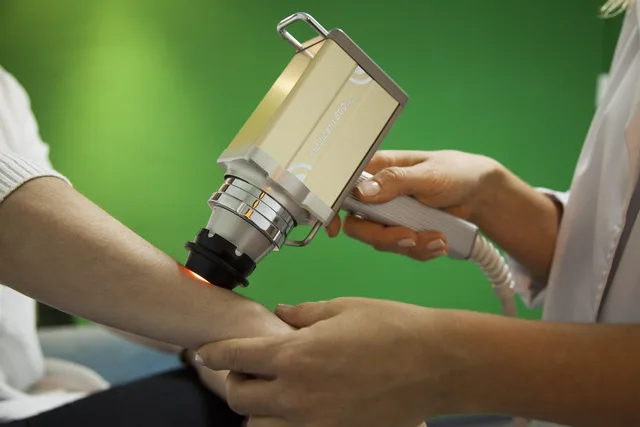
Equipment bought before demand is the classic failure. A laser that sits idle still carries a note, a service contract and an operator who must be trained and licensed to run it. Rent the modality, or lease with a buyout, until the room yield on that service covers the payment.
Supply cost per room rises with waste, and the way to count it starts from usable units per vial, not from the clinic down the street.
Injectable pricing from the vial
- Cost per treatment = (vial cost / usable units) x units
- Add waste you cannot bill
- Contribution = price - cost - provider pay
- Break-even per room hour = fixed cost / contribution
- Track waste monthly to find scheduling leaks
Waste is the line owners forget. A vial opened for one patient and partly discarded is a cost with no matching revenue. Track it monthly and it usually points at either scheduling or a package that promises more units than the vial supports.
Keep each room's costs on separate lines
Supply cost, injector pay and medical director fees belong on separate lines. Combined, they hide which one is out of line, and a room's yield looks better or worse than it is.
Separate P&L lines to watch
- Supply cost of goodsmoves with vial waste
- Injector payhourly or per-treatment
- Medical director feesfixed monthly retainer
- Device leases and service contractsfixed commitments
- Monthly reviewcash runway vs committed cost
- Supply cost of goods sits against treatment revenue and moves with vial waste.
- Injector pay is either hourly or per-treatment, and it belongs with the room hours it consumed.
- Medical director fees are usually a fixed monthly retainer, so they behave like rent, not like payroll.
- Device leases, service contracts and consumables are fixed monthly commitments that must be covered before any room is profitable.
A monthly review of cash runway against committed monthly cost will show whether a change improved the operation or just moved work to another line.
Who may work in the room
Decide who may work in a room before you staff it. The roles in a med spa are not interchangeable, and the differences are legal before they are operational. The hiring plan starts with the role list, not with the schedule.
Med spa role scope and licensing
Role
- Licensed medical professionals
- Delegate, on-site rules
- Registered nurses
- Often injectors
- Skincare specialists
- Consults, sanitation, no medical
- Patient coordinators
- Booking, intake, payment
- Practice manager
- Schedules, purchasing, P&L
Scope
- Licensed medical professionals
- State medical board
- Registered nurses
- State board of nursing
- Skincare specialists
- State licensing
- Patient coordinators
- Front desk and sales
- Practice manager
- Owner
Licensing body
- Licensed medical professionals
- Registered nurses
- Skincare specialists
- Patient coordinators
- Practice manager
- Licensed medical professionalsphysicians, nurse practitioners and physician assistants. What they may delegate, and whether a physician must be on site, is set by your state medical board.
- Registered nurses and aesthetic providersoften the injectors. Supervision and delegation rules come from your state board of nursing.
- Skincare specialists and estheticiansconsultations, sanitation, product advice, scheduling, and state licensing. Medical procedures sit outside that scope.
- Patient coordinatorsbooking, intake, consents, payment and follow-up. They are the front desk and the sales floor at once.
- Practice manager and ownerschedules, purchasing, marketing, and the P&L.
The U.S. Bureau of Labor Statistics says skincare specialists must pass a state exam for licensure after a state-approved cosmetology or esthetician program. That keeps the esthetician's chair apart from the injector's, so each room's staffed hours are planned role by role.
Two failure cases repeat in hiring. First, an injector hired on resume alone: a strong CV does not tell you whether the person documents consents, handles a complication, or keeps a room on schedule. Second, a provider misclassified as a contractor when the clinic sets their hours and prices. Both are cheap to prevent and expensive to unwind.
Confirm the classification with a licensed attorney and your state board before the first shift.
Device claims need the same skepticism. The U.S. Food and Drug Administration says aesthetic devices may be regulated depending on their intended use and whether they affect the structure or function of the body, and that risks come with any device. Check the clearance and the operator's training rather than a marketing claim.
Common questions
What counts as a staffed room hour?
An hour in which a provider was booked to that room, whether or not a patient filled it. That is the denominator of room yield. Billable hours, the hours a patient was actually in the room, are tracked beside it, and the gap between the two shows schedule leakage.
Does a med spa need a medical director?
Most states require some form of physician involvement, and what that means varies widely. Some require a physician on site for certain procedures, others allow delegation under written protocol. Check your state medical board and the AmSpa state law summaries, then have a licensed attorney review the contract.
What should I track monthly?
Room yield, rebooking rate, no-show rate, supply cost as a share of treatment revenue, and cash runway against committed monthly cost. Five numbers, one page. Add a metric only when it can change a decision you are about to make.
What is the biggest startup mistake?
Buying a device before demand exists. A device carries a payment, a service contract and a trained operator whether or not anyone books. Prove the service sells on rented or leased equipment first, then buy when room yield covers the note.