Guides
Profitable med spa services: signal versus noise
Injectables, laser hair removal and body contouring carry the margin, but vial yield, device time and injector pay decide which ones stay profitable.
What to take away
- Neurotoxin and dermal filler are the most profitable med spa services in most markets, because the client returns every three to twelve months.
- Laser hair removal and body contouring earn on device time, so an idle machine is the loss, not the consumable.
- Price injectables off vial yielddoses sold per vial, minus waste, times your cost per vial, plus injector pay.
- Medical director fees, injector pay and supply cost are separate P&L lines. Track them separately or you cannot see which service pays.
- Rebooking rate and revenue per treatment room tell you more than total revenue.
This article covers business operations only. It gives no clinical guidance on dosing, technique or device settings; those belong to the treating clinician, FDA labeling and the relevant specialty board.
It gives no legal advice on scope of practice, supervision or licensing; confirm with your state medical and nursing boards, AmSpa state law summaries and a licensed attorney in your state.
The services that actually carry margin
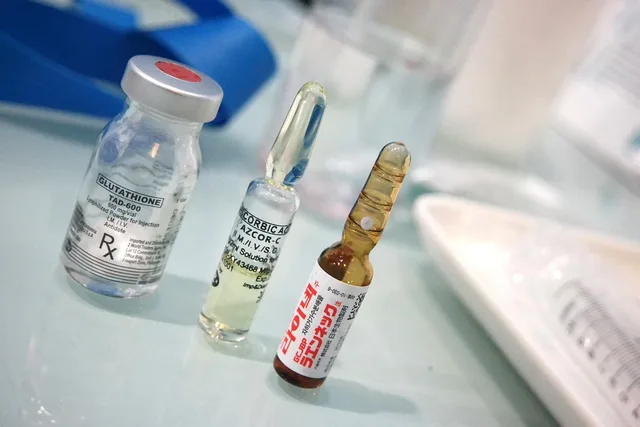
Botulinum toxin (Botox, Dysport, Xeomin, Jeuveau, Daxxify). Botox, Allergan's onabotulinumtoxinA, is the volume leader and the price benchmark for the category. It sells by the unit and buys by the vial. A 100-unit vial typically retails for $1,000 to $1,600 in most US markets as of 2026, or about $10 to $16 per unit.
Galderma's Dysport and Merz's Xeomin are dosed on different unit scales, so per-unit price comparisons mislead. Revance's Daxxify, approved in 2022, is marketed on longer duration. Margin depends on how many units you sell before the vial expires, and a part-used vial is a loss. Dense booking pays; slow days do not.
Dermal filler (Juvederm, Restylane, RHA, Sculptra). Filler sells by the syringe, prices by the syringe, and the client returns for maintenance. Juvederm (AbbVie) and Restylane (Galderma) typically retail at $600 to $900 per syringe in most US markets as of 2026.
Sculptra, a poly-L-lactic acid collagen stimulator, usually runs $800 to $1,200 per vial and needs a series. Filler carries a higher ticket than neurotoxin, a higher product cost and more sensitivity to injector skill, because correction and touch-up work come out of your margin.
Laser hair removal (Candela, Cynosure, Cutera, Lumenis). Sessions sell per visit or per package and run on a device with a fixed purchase or lease cost. Once the machine is paid for, each additional hour is close to pure contribution, and the constraint is machine hours, not product.
Alexandrite 755 nm platforms such as Candela GentleLase Pro and Cynosure Apogee Elite suit lighter skin. Dual-wavelength and Nd:YAG 1064 nm platforms such as Candela GentleMax Pro, Cynosure Elite iQ and Cutera excel HR suit darker skin types. Diode 805 nm devices such as Lumenis LightSheer sit between them.
A single session typically runs $150 to $400 for a small area, and a six-session package commonly sells for $600 to $2,000.
Body contouring (CoolSculpting, Emsculpt Neo, truSculpt iD). The economics match laser: capital equipment, technician time, package pricing. AbbVie's CoolSculpting, a cryolipolysis treatment, typically runs $600 to $1,500 per treated area, with cycles of 35 to 60 minutes.
BTL's Emsculpt Neo pairs radiofrequency with muscle stimulation, and single sessions typically sell for $750 to $1,000 inside four-session packages. InMode's truSculpt iD uses radiofrequency in shorter hands-free cycles. Demand for all three is seasonal and marketing-dependent, so a device bought before the demand was proven fails.
Skin tightening (Morpheus8, Ultherapy, Sofwave). Morpheus8 (InMode) combines microneedling with radiofrequency and typically sells for $600 to $1,200 per session, often in a series of three. Merz's Ultherapy uses microfocused ultrasound and typically runs $1,500 to $3,500 per treatment. Sofwave, another ultrasound platform, sits in a similar band.
Medical-grade facials and chemical peels (HydraFacial, TCA peels). HydraFacial (BeautyHealth) typically retails at $150 to $300 and takes about 30 minutes with no downtime. Peels using 20% to 35% trichloroacetic acid typically run $200 to $500 and need a few days of recovery.
Both carry a lower ticket and a low consumable cost. They fill technician hours that would otherwise sit empty, and they are the add-on that lifts revenue per visit.
Memberships and packages. A membership is not a treatment, but it makes the rest predictable. Typical med spa memberships run $99 to $299 per month, often as a banked credit toward injectables or a monthly facial. The structure converts one-off buyers into recurring revenue and gives you a forecast.
Where the money actually goes
Injectables are priced off vial yield. Work it in your own numbers:
Revenue per vial
- Units sold per vial, minus units wasted, equals units billed.
- Units billed times your price per unit equals revenue per vial.
- Revenue per vial minus product cost per vial minus injector pay per vial equals contribution.
If contribution per vial is thin, the problem is usually waste or underpricing, not demand. Track waste per vial weekly. Injector pay is the swing factor: nurse injectors commonly earn $50 to $75 an hour or 30% to 40% of service revenue in most US markets.
Product cost is the anchor: a 100-unit Botox vial commonly wholesales for $500 to $650 in the US, and at $12 per unit a fully sold vial brings in $1,200.
Device services are priced off machine hours:
Contribution per hour
- Sessions per hour times price per session equals revenue per machine hour.
- Revenue per machine hour minus technician pay per hour minus consumable cost per session equals contribution per hour.
A device that sits idle half the day cannot be rescued by raising the price. It needs booking density or a shorter service menu.
Medical director fees, injector pay and supply cost land on separate P&L lines. When they are lumped into one "cost of services" figure, a profitable injectable can hide an unprofitable device. Medical director stipends typically run $500 to $2,000 a month, depending on state and duties.
What to verify before you commit
On devices, the U.S. Food and Drug Administration: Aesthetic (Cosmetic) Devices page is the checkable source. Aesthetic devices may be regulated as medical devices depending on intended use, and procedures carry risks. Clients should understand device status and provider training rather than treating every cosmetic claim as equivalent.
On promotion, the Federal Trade Commission: Advertising FAQs: A Guide for Small Business requires claims to be truthful and supported. Before-and-after photos and testimonials need honest experience and disclosure of any material relationship.
On the books, the Internal Revenue Service: What kind of records should I keep? allows any recordkeeping system that clearly shows income and expenses, provided the documents behind purchases, sales, payroll and assets are kept.
How the pricing approaches compare
Where it fits a med spa
- A flat price per appointment (Botox at $12 per unit, filler at $700 per syringe)
- Work the returning client can compare against other quotes
- Time-based billing with a floor (consultations, device hours)
- Device hours and consultations where scope is unknown until the work starts
- Tiered packages (six laser sessions, four Emsculpt Neo sessions)
- A returning client who wants a clear choice
- An ongoing agreement (a $99 to $299 monthly membership)
- A returning client with a recurring need through pre-summer and pre-holiday demand
What it hides
- A flat price per appointment (Botox at $12 per unit, filler at $700 per syringe)
- The treatment appointment that runs long eats the margin
- Time-based billing with a floor (consultations, device hours)
- The returning client watches the clock instead of the result
- Tiered packages (six laser sessions, four Emsculpt Neo sessions)
- The middle tier ends up carrying everyone
- An ongoing agreement (a $99 to $299 monthly membership)
- Underused agreements feel like a bad deal to the buyer
Package structure and membership terms are covered in the med spa services and packages guide.
Common questions
Which med spa service is most profitable?
Neurotoxin usually carries the highest contribution per hour, because the client returns every three to four months and the appointment is short. Botox at $12 per unit on a 20-unit glabellar treatment grosses about $240 in a 15-minute slot.
Filler has a higher ticket but more product cost and more touch-up risk. Laser and body contouring win only when machine hours are full.
Why does vial yield matter so much?
You buy a vial, not a dose. Every unit that expires unsold is a direct loss, so margin depends on booking density as much as price. Track units sold per vial against units purchased, and review waste weekly rather than at year end.
When should I buy a device?
After demand is proven, not before. Run the service on a leased or shared machine, or a capped pilot, and confirm session volume covers the monthly payment plus technician time.
Device leases commonly run $1,500 to $5,000 a month in most US markets. Equipment bought ahead of demand is the most common capital mistake in this segment.
What should I track monthly?
Track revenue per treatment room, rebooking rate, vial waste, and contribution per injectable and per device hour. Total revenue tells you nothing about which service is paying for the building.