
Guides
Med spa pricing math across the US, from vial yield to waste
Medspa operator profit comes from cost per unit, vial yield and wastage math, not from matching the injectable prices of the clinic down the street.
What to take away
- Cost per unit, not vial price, decides margin. Divide the invoice price by the units your injectors actually draw.
- Yield moves with dilution, dead space and technique, so recalculate cost per unit every time the mixing changes.
- Partial vials, expired syringes and product drawn for patients who never arrive are cash losses.
- A price floor covers injector labor, medical director time, room or device time, product and card fees.
- Review the floor quarterly against invoices, the wastage log and injector hours, and raise menu prices when the floor moves.
Cost per unit is the number that decides margin
Every injectable carries two prices: what the distributor charges per vial, and what the clinic pays per unit delivered. Only the second one belongs in a pricing decision.
Vial Yield Changes Cost Per Unit
Full yield
- Vial cost
- $600
- Usable units
- 100 units
- Cost per unit
- $6.00
- Monthly gross profit
- $12,000
Tight yield
- Vial cost
- $600
- Usable units
- 80 units
- Cost per unit
- $7.50
- Monthly gross profit
- $15,000
Cost per unit is vial price divided by usable units. A $600 toxin vial that yields 100 units costs $6.00 per unit. The same vial yielding 80 units costs $7.50.
Botox and Juvederm come from Allergan Aesthetics, an AbbVie company. Dysport and Restylane come from Galderma. Vial sizes differ by brand, so divide by the units your injectors actually draw before you compare anything.
That $1.50 gap compounds. At 2,000 units a month, the difference between those two yields is $3,000 of gross profit on identical revenue.
Most operators know their vial cost. Fewer know their yield, and almost nobody tracks it per injector, which is where the spread shows up.
Build the worksheet before you touch the menu. For each product, list the vial price from the last invoice, the labeled units or milliliters, and the units actually drawn across the last ten vials. The average drawn is your real yield.
Cost per unit
| Product type | Vial cost | Usable units or mL | Cost per unit or mL |
|---|---|---|---|
| Botulinum toxin A | $600 | 100 units | $6.00 |
| Botulinum toxin A (tight yield) | $600 | 80 units | $7.50 |
| Hyaluronic acid filler | $220 | 1.0 mL | $220.00 |
| Hyaluronic acid filler (partial use) | $220 | 0.8 mL billed | $275.00 |
Fill the table with your own invoices. The right-hand column is the only cost figure that belongs in a pricing conversation.
A med spa pricing review that skips this step is guessing at the margin.
Vial yield math for toxin and filler
Vial yield is the billable units or milliliters one vial produces in normal practice. It is not the label number and not the number on the sales sheet.
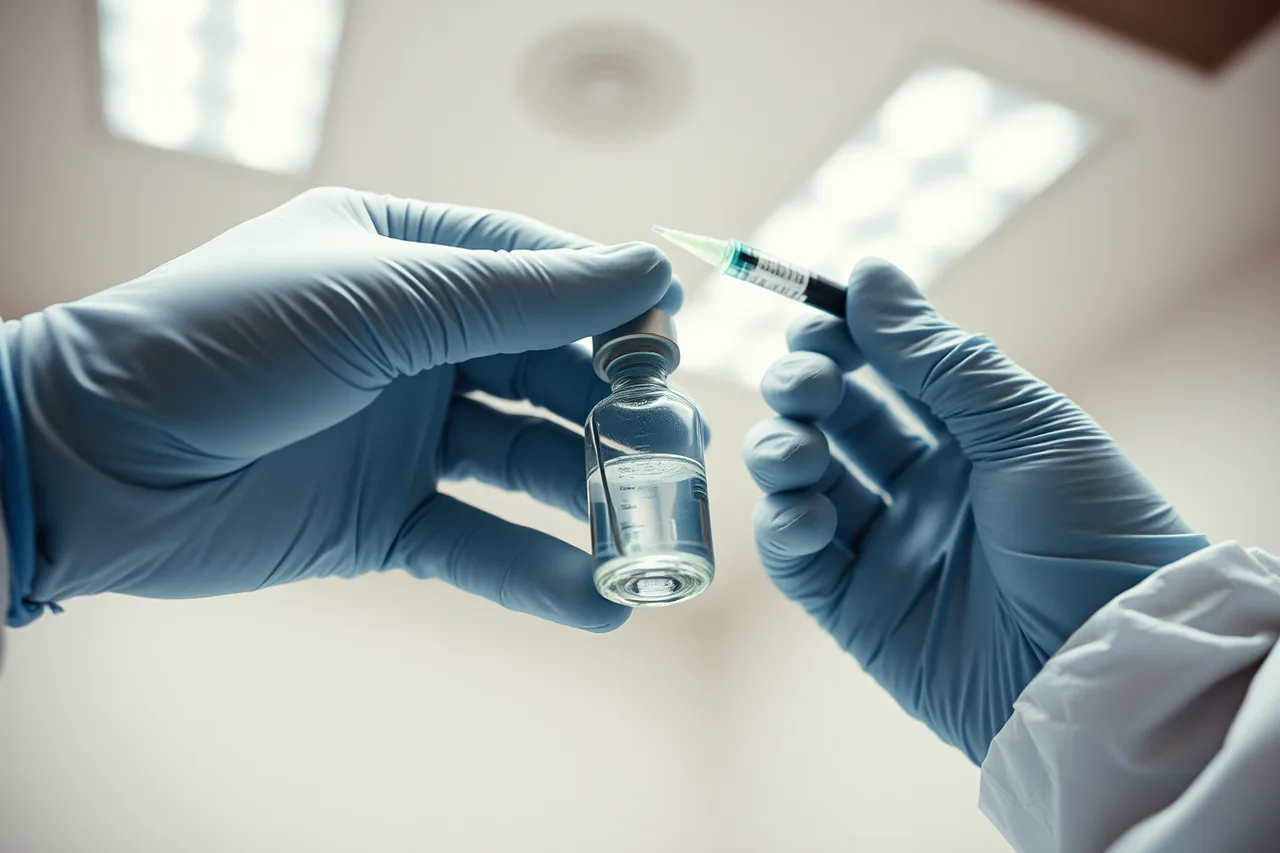
For botulinum toxin, yield depends on dilution, the dead space in the needle and hub, and how much product clings to the vial wall. A 100-unit vial reconstituted with 2.5 mL of preservative-free saline gives standard concentration, but the last units are hard to extract.
A careful injector draws 90 to 95 units from a 100-unit vial. A rushed room with poor lighting can drop that to 80.
Fillers behave differently because they sell by volume. A 1 mL syringe rarely delivers a full 1 mL of billable correction, especially in lips and tear troughs where small aliquots are placed and product stays behind.
Partial-vial sessions are the hard case. When a patient needs 0.4 mL and the clinic opens a 1 mL syringe, the remaining 0.6 mL goes to another patient in the same session or becomes waste.
Scheduling two filler patients back to back is the most effective yield tactic available. It turns a partial vial into a fully billed vial without discounting either patient. Cluster toxin appointments the same way so a vial is used inside its beyond-use window instead of discarded at close.
Track yield per injector for one month. The spread between your best and worst injector usually beats any supplier discount you can negotiate.
A worked yield example
A clinic buys toxin at $600 per 100-unit vial and the injector averages 88 units drawn. Real cost per unit is $6.82.
The clinic charges $12 per unit, so gross margin is $5.18 per unit, or 43 percent, before labor and overhead.
Improve yield to 95 units and cost per unit falls to $6.32, lifting gross margin to $5.68. On 2,000 units a month that is $1,000 of extra gross profit from technique alone.
This is why a med spa profit margin built on menu prices can look healthy while the floor under it erodes.
Worked price floor example
A toxin appointment takes 20 minutes of injector time, 5 minutes of front desk time and 2 minutes of medical director oversight. Product cost is $6.82 per unit for a 25-unit treatment, or $170.50.
Injector labor at $55 per hour fully loaded is $18.33. Front desk at $22 per hour is $1.83. Medical director at $150 per hour is $5.00. Room and device time at $12 per hour is $4.00. Card fees at 2.9 percent of a $300 ticket are $8.70.
Total cost is $208.36, and that is the floor. Any price below it loses money on every appointment.
Wastage, spoilage and expired stock
Wastage is product paid for and never billed. Spoilage is product degraded before use. Expired stock sat too long. All three land in cost of goods sold.
Toxin has a short beyond-use window once reconstituted. If the schedule does not fill that window, the leftover units are gone. A discarded 30-unit remainder at $6.82 per unit is $205 of lost margin.
Fillers last longer but not forever. Expired syringes cluster in clinics that took a volume discount on a product only two injectors use.
No-shows add a second layer. Product is drawn, the patient never arrives, and the vial cannot always be saved for the next day.
A wastage log changes behavior faster than any lecture. Record the date, product, units discarded, reason and injector, then review it monthly.
Three fixes recover most of the loss: cluster appointments by product, set minimum order quantities from real usage, and hold a short weekly review of the log.
Wastage is not a rounding error. In many clinics it runs 3 to 8 percent of injectable revenue, which is often the entire net margin on those services.
Keep wastage in its own account rather than buried in a single supply line. Your med spa hiring plan should name who owns the log, because an invisible loss is one nobody fixes.
What goes in the wastage log
Wastage Log Fields
- Date and time of discard
- Product name, lot number
- Units discarded
- Reason for discard
- Injector name
Every entry carries the same seven fields, filled in when the product is discarded.
- Date of discard
- Product name and lot number
- Units or mL discarded
- Reason (expired, no-show, partial vial, technique)
- Injector
- Cost at current cost per unit
- Action taken to prevent recurrence
Building a price floor from labor, medical director and device time
A price floor is the lowest price that still covers delivery. Below it, every appointment reduces profit.
Four Parts of a Price Floor
- Injector laborwages, taxes, benefits, charting
- Medical directorfixed fee plus physician time
- Room or devicemachine, service contract, space
- Productvial cost divided by usable units
The floor has four parts: injector labor, medical director cost, room or device time, and product. Add card processing and a small allowance for redo work.
Injector labor is more than the hourly wage. It includes payroll taxes, benefits, paid time off and non-billable charting and follow-up. The BLS nurse wage data is the starting point for nurse injector staffing models; use the state or metro figure, because California, New York and Texas spread wide.
Typical fully loaded injector cost runs $45 to $55 an hour in Texas and $55 to $70 in California or New York, with metro rates at the top of each band. Rent moves the same way, so the floor for one 25-unit toxin appointment sits higher in Manhattan or Beverly Hills than in suburban Houston.
Medical director cost is a fixed monthly fee in most states plus physician time for chart review, protocol updates and delegation oversight. State medical boards set supervision and delegation rules, so required hours vary. The BLS supervising clinician wages benchmark what that arrangement should cost in your market.
Device time matters for lasers and body contouring. The floor must recover the machine, its service contract and the room it occupies.
Labor law changes the floor directly. The FLSA wage and hour rules set overtime and minimum wage requirements that shift the cost of a long treatment day.
If you use contractor injectors, the IRS S corporation rules explain when an S corporation election may fit a med spa entity and how owner compensation is treated. Entity and supervision questions belong with a licensed attorney in your state, alongside the AmSpa state law summaries.
Why matching local competitor prices breaks the math
Competitor prices tell you what the market will bear. They say nothing about your cost. Those are different questions.
Same Price, Different Cost Base
Efficient clinic
- Yield
- 95 units
- Medical director
- Low fee
- Injector
- Busy
- Profit at $10/unit
- Positive
High-cost clinic
- Yield
- 80 units
- Medical director
- High fee
- Injector
- Part-time
- Profit at $10/unit
- Below floor
A clinic with 95-unit yield, a low medical director fee and a busy injector can profit at $10 per unit. A clinic with 80-unit yield, high rent and a part-time injector cannot.
Matching the first clinic's price pushes the second below its floor. Volume does not fix that; it multiplies the loss.
Discounting also resets expectations. A patient acquired on a 20 percent promotion rarely pays full price later, so the discount becomes the real price.
Geography is real. Injectable prices in Manhattan, Beverly Hills and Miami run above the national median because rent, wages and demand are higher. Suburban markets in Georgia or Arizona support lower prices but carry lower costs too.
Know your floor, know your target margin, then decide where to sit against local prices. That is how to price med spa services without copying a competitor's list.
When a price must rise, tell existing patients before the new menu goes live. A short note and a grace period protects retention.
Margin at three price points
Margin scenarios show what price movement does to profit, and a med spa quote template is where the result gets written down. Hold the treatment and the cost base constant across all three.
Take the toxin appointment above: product $170.50, labor and overhead $38.86, floor $208.36.
At $250, gross profit is $41.64 and margin is 16.7 percent. That covers delivery but leaves little for marketing, rent and owner profit.
At $325, gross profit is $116.64 and margin is 35.9 percent. Most healthy injectable programs sit in this range.
At $400, gross profit is $191.64 and margin is 47.9 percent. That holds only when reputation, results and service justify it.
| Price point | Revenue | Total cost | Gross profit | Margin |
|---|---|---|---|---|
| $250 | $250.00 | $208.36 | $41.64 | 16.7% |
| $325 | $325.00 | $208.36 | $116.64 | 35.9% |
| $400 | $400.00 | $208.36 | $191.64 | 47.9% |
Margin at Three Toxin Price Points
- Low $25016.7%
- Mid $32535.9%
- High $40047.9%
Run the same table for fillers, lasers and memberships. The pattern holds: a small price change moves margin far more than a small cost change.
Reviewing pricing quarterly against real usage data
Quarterly review keeps pricing tied to reality. Supplier prices change, wages change, and the treatment mix shifts.
Quarterly Pricing Review Steps
- Pullinvoices, wastage log, injector hours, appointment mix
- Recalculatecost per unit and yield for top five products
- Comparenew floor to current menu
- Decideraise price, rework protocol or stop offering
- Documentone-page memo with new cost, floor and decision
Check the medical director agreement and state supervision rules in the same pass. A change in delegation rules changes required physician hours and moves the floor.
Track four med spa KPIs monthly: revenue per injector hour, product cost as a percentage of injectable revenue, wastage percentage and average ticket. These catch most pricing problems early.
Set a trigger for supplier increases. If a vial price rises more than 5 percent, review the menu within 30 days.
Document the review in a one-page memo: new cost per unit, new floor, price decision. The team gets a reference, and insurance and tax questions get an answer.
Common questions
How often should I recalculate cost per unit?
Every time the vial price, dilution or average yield changes. Quarterly is the minimum, and a supplier increase should trigger one immediately.
What is a realistic vial yield for botulinum toxin?
A careful injector often draws 90 to 95 units from a 100-unit vial. Rushed technique or poor lighting can drop it to around 80, which raises cost per unit sharply.
Does wastage really move profit that much?
Yes. Every discarded unit was already paid for at your cost per unit, and the loss repeats each week until scheduling or order quantities change.
Can I price below a competitor and still make money?
Only if your cost per unit, labor cost and medical director cost are lower than theirs. Matching a price without matching the cost base is how clinics lose money on volume.
What belongs in the price floor?
Product, injector labor with taxes and benefits, medical director time, room or device time, card fees and a small allowance for redo work.