Guides
Pricing a med spa quote: template and examples
A med spa quote template turns consult findings into treatment, package and membership prices the front desk can defend with clear margin math.
What to take away
- A quote is built from the consult note, not from a competitor's menu: the clinician records the finding, the treatment plan, and the number of sessions.
- Price each treatment from vial yield and device time, so the quote survives a reorder at a higher supply cost.
- Membership and package pricing must state what happens when a device is out of service in a booked week.
- Every quote carries an expiration date and a named authorizer, or the front desk renegotiates it at the counter.
- Keep the signed quote, the consent form, and the payment record together; the IRS recordkeeping page below says what to retain.
This article covers med spa business operations, not clinical or legal advice. Dosing, technique, device settings and complication management belong to the treating clinician and FDA labeling. Scope of practice, supervision and corporate practice of medicine vary by state; confirm with your state medical and nursing boards, AmSpa state law summaries, and a licensed attorney in your state.
What goes in the template
The template is one page the consult room and the front desk both use. It has three blocks: what the clinician found, what the client is buying, and what it costs.
Med Spa Quote Template Blocks
- Client and consult record
- Plan and scope
- Price block
- Terms
- Medical consent form separate
Client and consult record. Client name, date of birth, consult date, treating clinician, and the license or credential under which that clinician practices. The clinician writes the finding in their own words and names the product or device, following FDA labeling for that product.
Plan and scope. Number of sessions, treatment areas, product or device per session, and the interval between sessions. If the plan changes after the first session, the change is written on the quote and re-signed, not agreed by text message.
Price block. Per-session price, package price, membership price if offered, deposit, and balance due at each visit. Show the supply cost basis in your own file, not on the client's copy.
Terms. Expiration date, cancellation and no-show terms, refund policy, and who is authorized to approve a change. Keep the medical consent form separate from the quote; consent is not a billing document.
Worked example: one injectable treatment
These are illustrative numbers for the arithmetic, not market prices. Substitute your own.
Injectable Session Floor Math
- $300Vial cost
- $60Supply per session
- $129Floor per session
- $70Gross margin at $199
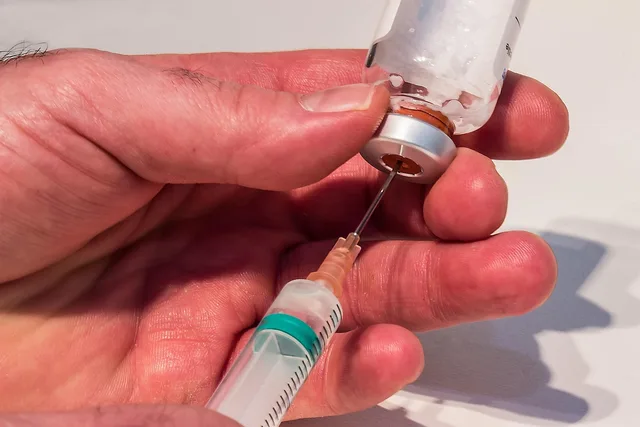
Say a vial costs $V and contains U units. If the clinician plans 20 units per session and the vial holds 100 units, one vial covers five sessions. Supply cost per session is V divided by 5.
Add the injector's pay for the appointment, the medical director fee allocated per visit, room and consumable cost, and card processing. That sum is your floor.
If V is $300, supply is $60 per session. Add $45 injector pay, $10 medical director allocation, $8 consumables and $6 processing: floor is $129. A $199 session price leaves $70 of gross margin per appointment. At $149 it leaves $20, and one re-do eats the month.
Waste is the variable most quotes ignore. If the clinician uses 20 units and the remaining 80 units cannot be carried to another client under your state's rules and the product's labeling, the whole vial is the cost of that one session, not one fifth of it. Build the quote so a single-session vial still clears your floor.
Worked example: a membership
A membership is a prepaid schedule, so price it against the schedule, not the menu.
Membership Pricing Check
Does M times six cover 6F plus processing?
Membership clears floor
Loses money on full users
Take a six-month membership at $M per month covering one treatment each month. Your floor per treatment is F. Six treatments cost 6F. If M times six is below 6F plus processing, the membership loses money on every member who uses it fully.
Members who skip a month are where the margin lives, so state in the terms whether a missed month rolls over, expires, or converts to product credit. Say plainly what happens when a device is out of service during a booked week: the appointment moves, the month does not silently expire.
Pricing approaches and what each hides
Where it fits
- Flat rate per treatment
- Repeatable appointments with a known product amount
- Per-unit injectable pricing
- Clients who compare unit counts across providers
- Good, better, best packages
- Returning clients choosing between plans
- Monthly membership
- Clients on a maintenance schedule
- Consult fee credited to treatment
- Consults that take real clinician time
What it hides
- Flat rate per treatment
- One difficult appointment costs more than it earns
- Per-unit injectable pricing
- The minimum charge that covers a single-session vial
- Good, better, best packages
- The middle tier carries everyone who cannot decide
- Monthly membership
- The member who books every included visit
- Consult fee credited to treatment
- No-shows who never convert and never pay
What to verify before acting
Internal Revenue Service: What kind of records should I keep? covers how a business shows income and expenses and which documents support purchases, sales, payroll and assets. Keep the signed quote, the consent form and the payment record together so a charge can be traced to the service delivered.
Federal Trade Commission: Advertising FAQs: A Guide for Small Business governs how you advertise the prices on that quote. Before-and-after claims, result claims and testimonials must be truthful, supported, and disclose material relationships.
U.S. Bureau of Labor Statistics: Skincare Specialists describes consultation, sanitation, product recommendation, scheduling and state licensing as common features of esthetics work. Medical procedures sit outside that scope and need separate review under your state's rules.
Common questions
Who signs the quote?
The client who is buying the treatment signs, and the quote names that person. If a spouse or parent is paying, record both the payer and the client, because the consent form belongs to the client alone.
How long should a quote stay valid?
Long enough to cover one reorder cycle for the products involved, and no longer. When a vial or device price changes, the old quote expires and the new one is issued in writing.
Can the front desk discount at checkout?
Only within a written range the owner sets, and the discount is recorded on the quote. An undocumented discount hides the true margin and makes the next price increase impossible to explain.
What if the plan changes mid-course?
The clinician writes the new plan, the quote is reissued with the new price, and the client signs again. Verbal changes are how a profitable treatment becomes a disputed charge.