Guides
Funding a new med spa: costs first, then the options
Med spa startup costs break into licensing, devices, buildout and payroll, and the funding that fits depends on which of those your cash flow can carry.
What to take away
- Funding a new med spa starts with cost lines that decide your loan: licensing, devices, buildout and payroll. Add medical director fees, software and malpractice cover.
- Typical totals in most marketsan injectable-only suite runs $75,000 to $200,000; a single-device med spa runs $200,000 to $500,000; a multi-device clinic can pass $1.5 million.
- SBA 7(a) and 504 loans, equipment financing, a bank term loan, and a physician or investor partner are the five funding routes most new owners weigh.
- Device choice drives the number. A laser or body-contouring unit can run $50,000 to $200,000; a single injectable room with a fridge and a chair runs $3,000 to $25,000.
- Your break-even is treatment rooms times booked hours times average ticket, minus injector pay, product cost and medical director fees. Substitute your own figures.
- Confirm scope of practice, supervision ratios and corporate practice of medicine with your state medical and nursing boards and a licensed attorney in that state before you sign a lease.
This article covers business and financing information only, not medical, legal or tax advice. Licensing, supervision and corporate practice rules vary by state, so confirm them with your state medical and nursing boards, AmSpa state law summaries and a licensed attorney in your jurisdiction.
What a med spa actually costs to open
A med spa is not one business. It is a licensed medical practice wrapped in a retail front of house, and the two carry separate cost lines.
Med Spa Startup Cost Lines
- 100–500Entity formation
- 1,500–7,500Attorney and filing
- 200–1,500State medical board
- 50–300Cosmetology board
The medical side carries the licensing, the medical director, the injectables and the devices. The retail side carries the rooms, the booking flow and the marketing that fills them.
Start with the med spa startup and market guide for the sequence, then price each line below against your own market.
Licensing and entity. A physician owner or a medical director arrangement, a state medical board registration, and cosmetology board licensing for aestheticians all land here. So does an entity structure that satisfies your state's corporate practice of medicine rule.
Entity formation typically costs $100 to $500. Attorney and filing costs often run $1,500 to $7,500. State medical board registration typically runs $200 to $1,500, and cosmetology board licensing runs $50 to $300. Medical director fees typically run $1,500 to $4,000 per month.
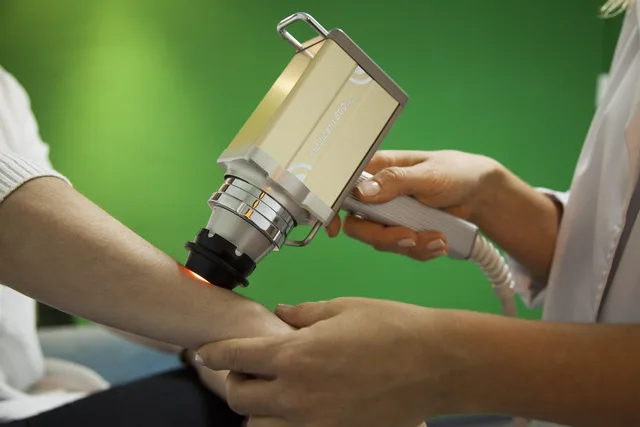
Devices. This is the line that swings the total. Injectable-only rooms need almost no capital equipment. Laser, RF microneedling, body contouring and IPL units are the expensive ones, and each carries a service contract and downtime risk.
What a med spa costs
- A new Candela GentleMax Pro laser, which handles hair removal and vascular lesions, typically runs $80,000 to $150,000. Refurbished units often sell for $35,000 to $70,000.
- InMode Morpheus8, an RF microneedling platform, commonly prices at $80,000 to $150,000 new. Lease payments often land at $1,500 to $3,000 per month.
- Cynosure SculpSure, a body-contouring laser, usually lists at $70,000 to $120,000. Cutera truSculpt iD often runs $50,000 to $100,000.
- A Sciton BBL Hero broadband light system typically costs $75,000 to $150,000. Alma Harmony IPL systems often run $30,000 to $80,000.
- Injector room basics are smallera medical fridge $1,000 to $3,000, a treatment chair $500 to $2,000, and initial Botox and filler inventory $5,000 to $20,000.
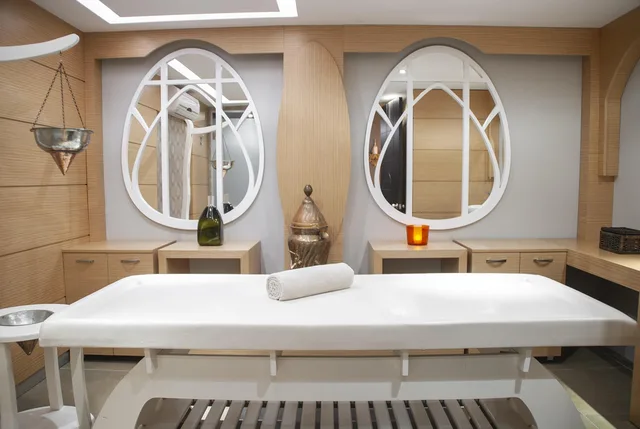
Buildout. Treatment rooms, plumbing for a scrub sink, electrical for devices, HVAC, and a waiting area. A retrofit of existing clinic space costs far less than a raw shell.
Medical buildout typically runs $100 to $300 per square foot; a 2,000 square foot clinic can cost $200,000 to $600,000. Retrofit work often runs $50 to $150 per square foot. Electrical for a laser can add $5,000 to $20,000. Plumbing for a scrub sink runs $3,000 to $8,000. HVAC work runs $10,000 to $40,000.
Payroll. Injectors, aestheticians, front desk, and a practice manager. Injector pay is usually the largest recurring cost and is often structured as a base plus a percentage of treatment revenue.
Injector base pay typically runs $60,000 to $120,000 plus 15% to 30% of treatment revenue. Aestheticians often earn $18 to $30 per hour. Front desk staff earn $16 to $22 per hour. A practice manager earns $55,000 to $85,000.
Recurring. EMR and scheduling software, malpractice and general liability insurance, medical director fees, product inventory, and marketing.
Aesthetic Record, Boulevard, Zenoti and Pabau often run $100 to $1,000 per month. Malpractice cover typically runs $1,500 to $6,000 per year. General liability runs $1,000 to $3,000 per year. Product inventory runs $5,000 to $25,000. Marketing often runs $2,000 to $10,000 per month.
The funding options, by name
The funding options
What it is
- SBA 7(a) loan
- Government-guaranteed bank loan, up to $5 million, for working capital, equipment and real estate
- SBA 504 loan
- Bank loan plus a long-term fixed-rate CDC debenture, up to $5 million
- Equipment financing
- Loan or lease secured by the device itself
- Bank term loan
- Conventional loan from a community or specialty bank
- Physician or investor partner
- Equity in exchange for capital
Best fit and typical terms
- SBA 7(a) loan
- Owners with a formed entity and a business plan; often prime plus 2.25% to 3.5%, up to 10 years for working capital, 25 years for real estate
- SBA 504 loan
- Buying or building your own facility; 50% bank, 40% CDC, 10% borrower; 20-year real estate, 10-year equipment
- Equipment financing
- One large device purchase; 2 to 5 years, rates often 7% to 20% APR
- Bank term loan
- Established owners with collateral; 5 to 7 years, often prime plus 1% to 3%
- Physician or investor partner
- Owners who can give up 10% to 30% equity and some control; often brings a prescriber
An SBA 7(a) loan is the default first stop for most new owners. It is a bank loan with a government guarantee, which is what lets a lender say yes to a business with no trading history. The maximum is $5 million, and maturities stretch to 10 years for working capital and 25 years for real estate.
Med Spa Funding Options Compared
SBA 7(a)
- Best for
- No trading history
- Max amount
- $5 million
- Term
- 10–25 years
- Rate
- Prime + 2.25–3.5%
- Structure
- Bank loan
SBA 504
- Best for
- Real estate
- Max amount
- $5 million
- Term
- 10–20 years
- Rate
- Fixed CDC debenture
- Structure
- 50/40/10 split
Equipment
- Best for
- One large device
- Max amount
- Device cost
- Term
- 2–5 years
- Rate
- 7–20% APR
- Structure
- Secured lease
Bank term
- Best for
- Collateral owners
- Max amount
- Varies
- Term
- 5–7 years
- Rate
- Prime + 1–3%
- Structure
- Conventional loan
An SBA 504 loan pairs a bank loan with a long-term fixed-rate debenture and is built for real estate and heavy equipment. The structure is usually 50% bank, 40% CDC and 10% borrower. It suits an owner buying a building rather than leasing.
Equipment financing is the cleanest way to buy a single laser or body-contouring unit. The device is the collateral, so approval leans on the device's resale value rather than your whole balance sheet. Rates often land between 7% and 20% APR, and terms run two to five years.
A conventional bank term loan works once you have trading history and collateral. Community banks and specialty medical lenders understand the model better than a generalist. Pricing often runs at prime plus 1% to 3% for five to seven years.
A physician or investor partner brings capital and often a prescriber. The cost is equity and, sometimes, control. A typical stake runs 10% to 30%. Have an attorney draft the operating agreement and the medical director contract together.
Costs that surprise new owners
Device downtime is the cost nobody budgets. A laser out of service for two weeks is two weeks of lost treatment revenue plus the service call, and it usually happens in your busiest month. A service call often runs $1,500 to $10,000.
Hidden Costs to Budget
- Device downtimelost revenue plus $1,500–$10,000 service call
- Injector misclassificationback taxes, penalties, interest
- Equipment bought before demand sits idle
- Keep equipment checklist next to funding application
- Read SBA business guide before estimating
- Check IRS starting a business page for entity and tax setup
- Confirm FDA device classification before purchase
Injector misclassification is the second. Paying an injector as a contractor when your state treats them as an employee brings back taxes, penalties and interest.
The third is buying equipment before demand. A device bought on a forecast rather than a waiting list sits idle while the loan payment does not.
Keep a med spa equipment checklist next to the funding application, so the loan covers the device you can actually fill.
The U.S. Small Business Administration business guide walks through market research, startup costs, permits, insurance and finance in one place, and it is worth reading before you estimate anything.
For the entity and tax setup, the IRS starting a business page covers structure, tax IDs and record keeping. Your structure also decides how you depreciate device purchases.
On the devices themselves, FDA aesthetic and cosmetic devices explains when a unit counts as a medical device. That status affects what you may claim in marketing and who may operate it.
Where the money comes back
Funding is only half the model. The other half is the arithmetic that pays the loan.
Break-Even Room-Hour Model
- Booked hours × average ticket = revenue per room
- Injectable average ticket: $300–$800
- Laser package average ticket: $500–$1,500
- Subtract injector pay, product, medical director, device service
- Contribution per room-hour
- Total monthly fixed cost ÷ contribution = break-even room-hours
- Substitute your own rent and injector rate
Revenue per treatment room equals booked hours times average ticket. An injectable average ticket often runs $300 to $800. A laser package often runs $500 to $1,500. Subtract injector pay, product cost, medical director fees and device service, and you have the contribution each room makes.
Divide your total monthly fixed cost by that contribution and you have the number of room-hours you must sell to break even.
Substitute your own figures; no national benchmark fits your rent or your injector rate. Before you assume those room-hours convert, it is worth learning how to design a med spa booking flow that holds up on a busy day, because unfilled gaps in the schedule quietly break the model.
A med spa profit margin and break-even view belongs in the loan application, not after it. Lenders fund models they can check.
Common questions
Do I need a physician owner to open a med spa?
It depends on your state. Some states require physician ownership or a medical director arrangement, and corporate practice of medicine rules restrict who may own the practice entity. Confirm with your state medical board and a licensed attorney before you form the company.
Which funding option is best for a first med spa?
An SBA 7(a) loan is the usual first stop, because the government guarantee offsets your lack of trading history. If the main cost is one device, equipment financing is simpler and faster. If you are buying a building, look at the 504 program.
How much does a device add to startup cost?
It ranges from a few thousand dollars for basic injectable room equipment to six figures for a laser or body-contouring platform. A basic injectable room adds $3,000 to $25,000. A new laser or body-contouring platform often adds $50,000 to $200,000. Get written quotes from two distributors, and price the service contract and consumables alongside the unit.
What should I confirm before signing a lease?
Confirm your licensing pathway, your supervision requirements and your entity structure first, because a lease signed before those are settled is hard to unwind. Then confirm the space can carry the electrical, plumbing and HVAC your devices need.